



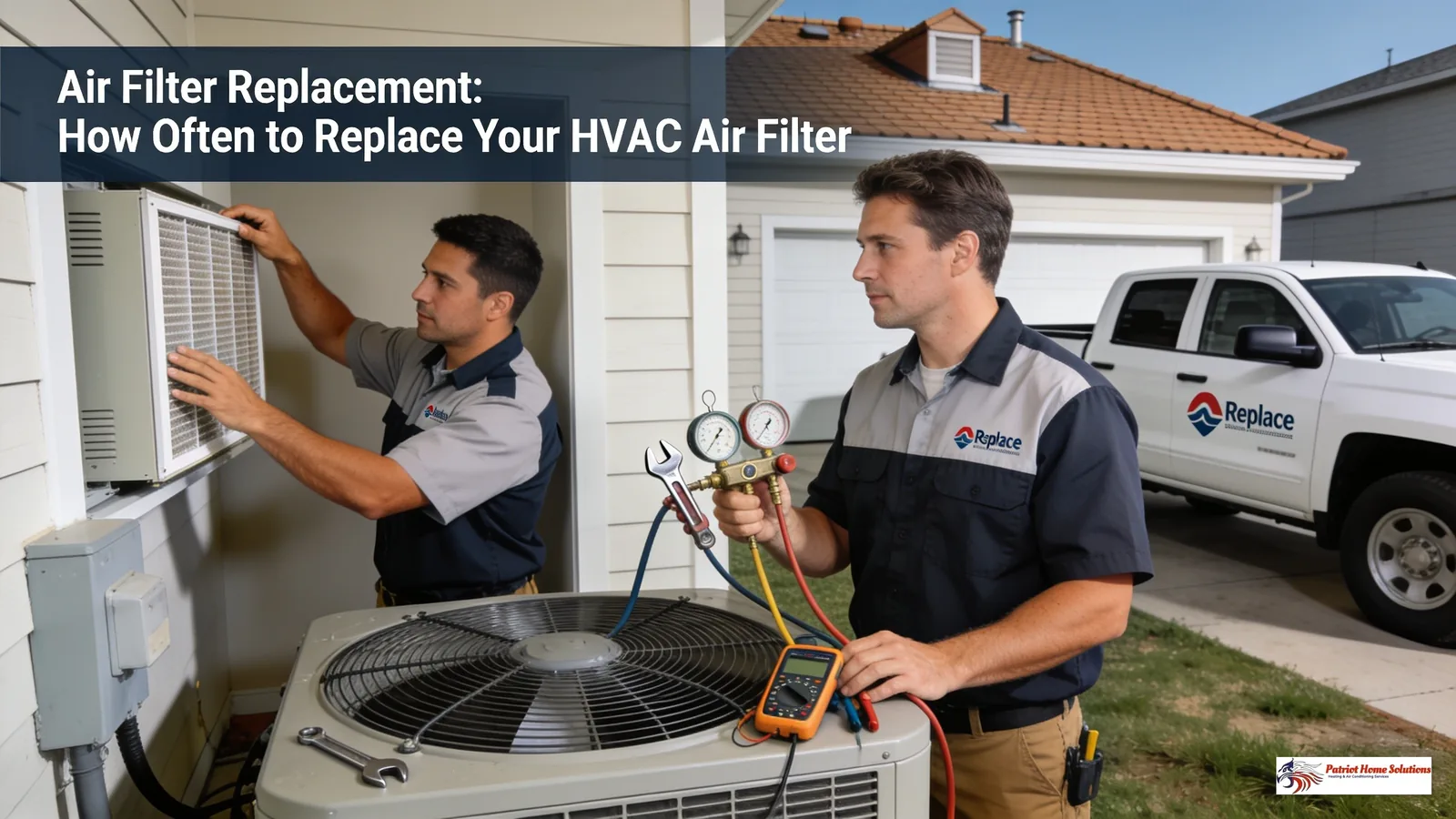
Air Filter Replacement: How Often to Replace Your HVAC Air Filter
At Patriot Home Solutions Heating & Air Conditioning Services, we guide homeowners in Corsicana, TX, through every step of proper air filter care. Air filter replacement schedules depend on filter type: 1-inch fiberglass filters need changing every 30 days, while 1-inch pleated filters last 30 to 90 days and 4-inch media filters run 6 to 12 months. Correct replacement means turning off the system, sliding out the old filter, checking airflow arrows, and inserting the new filter in the same direction, and we walk our clients through this process during every visit.
What Do You Need Before You Start?
A successful air filter replacement requires three things: the correct filter size, a few basic tools, and about five minutes of uninterrupted time. We walk homeowners through this exact preparation during our maintenance visits in Corsicana, TX, and we’re glad to do the same for every client we serve.
Before touching the system, gather the following:
The filter’s size, which is printed on the frame of the old filter. Reading it directly from the frame keeps a replacement purchase accurate and avoids a second trip to the store.
A replacement filter matching that size and airflow rating. Choosing the correct rating keeps the system running the way it was designed to.
A flashlight, if the filter slot sits in a dim closet or attic space. Good visibility helps confirm the airflow arrow before the new filter goes in.
A marker to note the installation date on the new filter’s frame. This small habit makes the next replacement date easy to track without guesswork.
The filter’s size, which is printed on the frame of the old filter. Reading it directly from the frame keeps a replacement purchase accurate and avoids a second trip to the store.
A replacement filter matching that size and airflow rating. Choosing the correct rating keeps the system running the way it was designed to.
A flashlight, if the filter slot sits in a dim closet or attic space. Good visibility helps confirm the airflow arrow before the new filter goes in.
A marker to note the installation date on the new filter’s frame. This small habit makes the next replacement date easy to track without guesswork.
What Size Filter Do I Need?
We recommend checking the cardboard frame of the current filter first, since the dimensions are printed directly on the edge. If the frame is damaged or unreadable, we suggest measuring the slot opening with a tape measure instead. Matching the exact size prevents gaps that let unfiltered air bypass the system entirely.
Do Different Systems Need Different Filters?
Yes. Furnace filter types vary by thickness and material, and the wrong choice restricts airflow or fails to trap particles effectively. We recommend confirming the manufacturer’s specifications before purchasing a replacement, and our team is glad to help homeowners in Corsicana, TX, make that match.
Once the essentials are on hand, follow these steps for the HVAC filter change:
Locate the filter slot near the air handler or return vent. This is usually the fastest way to find where the current filter sits.
Slide out the old filter and note the airflow arrow direction printed on its frame. This arrow tells you exactly how the new filter needs to face.
Insert the new filter with the arrow pointing toward the unit. A reversed filter reduces airflow and filtration effectiveness right away.
Write the date on the frame for easy tracking. This gives a clear reference point for the next scheduled replacement.
Locate the filter slot near the air handler or return vent. This is usually the fastest way to find where the current filter sits.
Slide out the old filter and note the airflow arrow direction printed on its frame. This arrow tells you exactly how the new filter needs to face.
Insert the new filter with the arrow pointing toward the unit. A reversed filter reduces airflow and filtration effectiveness right away.
Write the date on the frame for easy tracking. This gives a clear reference point for the next scheduled replacement.
Our team offers inspections and services designed to fit a range of household needs. An HVAC maintenance plan keeps replacement schedules on track between visits, and we build ours around what homes throughout Corsicana, TX, actually need.
How Often Should You Replace Your Filter?
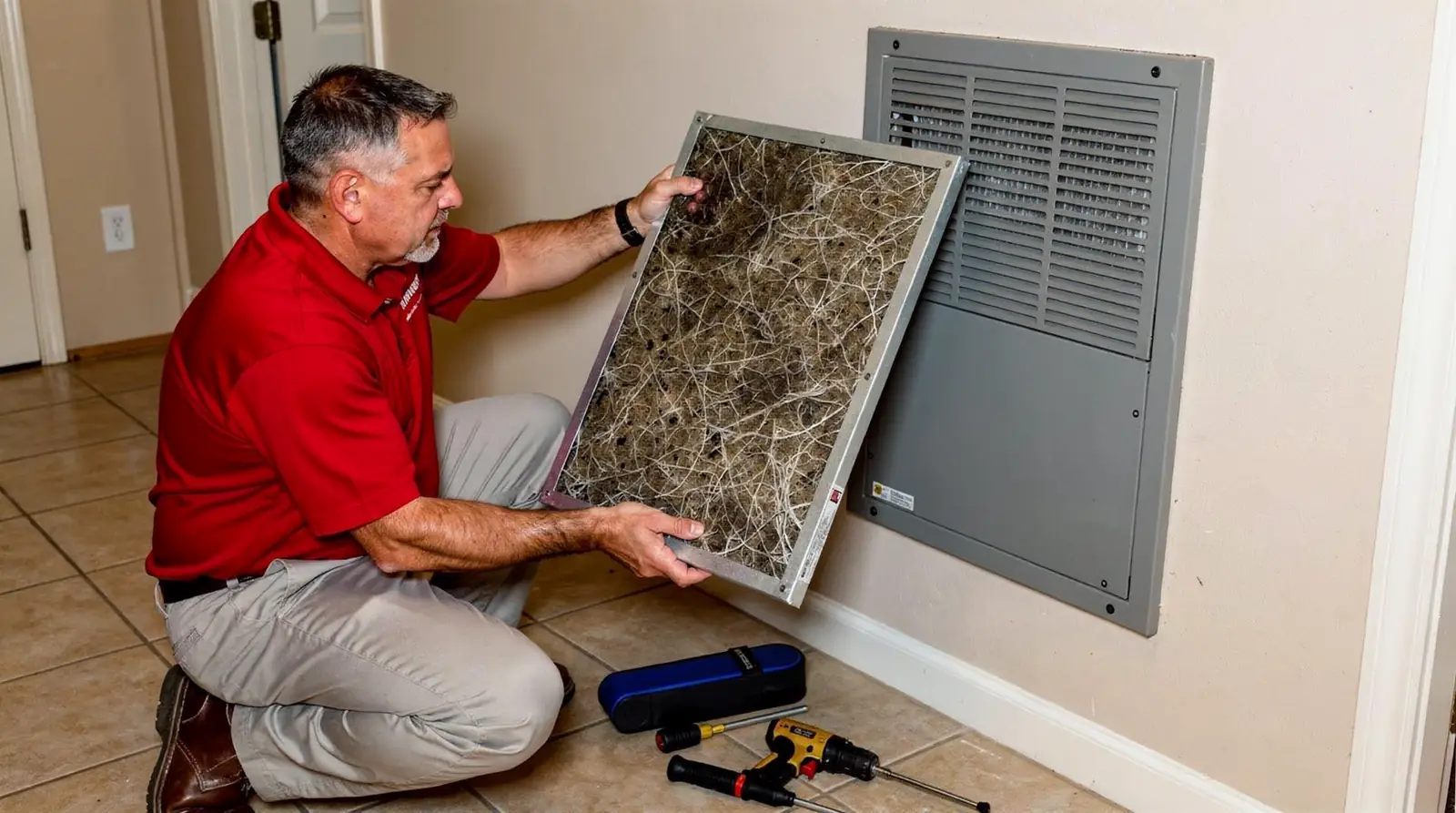
A standard recommendation for air filter replacement sets a range of 30 to 90 days for most homes. The right interval depends on filter type and how hard the system runs. Falling behind this schedule chokes airflow, forces the blower to strain, and lets dust and allergens recirculate through living spaces. We built our maintenance guidance around this range because it reflects what most residential systems in Corsicana, TX, actually need.
Furnace filter types drive the exact timeline more than any other single factor. Thinner, cheaper filters trap less debris and clog faster, while thicker filters hold more capacity and stretch the interval considerably.
Recommended Replacement Interval
1-inch fiberglass
Every 30 days
1-inch pleated
Every 30 to 90 days
4-inch media
Every 6 to 12 months
Does Filter Thickness Really Change the Timeline?
Yes — thickness is the single biggest variable in a proper HVAC filter change schedule. A 1-inch fiberglass filter offers minimal surface area, so we recommend swapping it out every 30 days to keep airflow steady. A 1-inch pleated filter holds more dust before it clogs, giving a flexible 30- to 90-day window depending on household activity. A 4-inch media filter, by contrast, has enough surface area to run efficiently for 6 to 12 months before it needs attention.
How Do We Know Which Interval Fits Our Home?
We recommend following this sequence to settle on a dependable schedule:
Check the filter’s printed size and type to confirm whether it’s fiberglass, pleated, or a 4-inch media unit. This first step keeps every following decision accurate.
Match that type to the intervals above as a starting baseline. Treating this as a starting point rather than a fixed rule keeps expectations realistic.
Inspect the filter monthly during the first season to see how quickly it collects dust in a particular home. Every household generates a different amount of dust and pet hair, so this step personalizes the schedule.
Adjust the interval shorter if the filter looks gray or clogged before the suggested date. Trusting what you see on the filter protects the system better than following the calendar alone.
Check the filter’s printed size and type to confirm whether it’s fiberglass, pleated, or a 4-inch media unit. This first step keeps every following decision accurate.
Match that type to the intervals above as a starting baseline. Treating this as a starting point rather than a fixed rule keeps expectations realistic.
Inspect the filter monthly during the first season to see how quickly it collects dust in a particular home. Every household generates a different amount of dust and pet hair, so this step personalizes the schedule.
Adjust the interval shorter if the filter looks gray or clogged before the suggested date. Trusting what you see on the filter protects the system better than following the calendar alone.
Homeowners who aren’t sure where their system falls on this range don’t have to guess alone. We offer inspections designed to fit a range of needs, giving homeowners in Corsicana, TX, a clear answer on the replacement interval that protects both efficiency and indoor air quality.
Which Furnace Filter Type Fits Your Home?
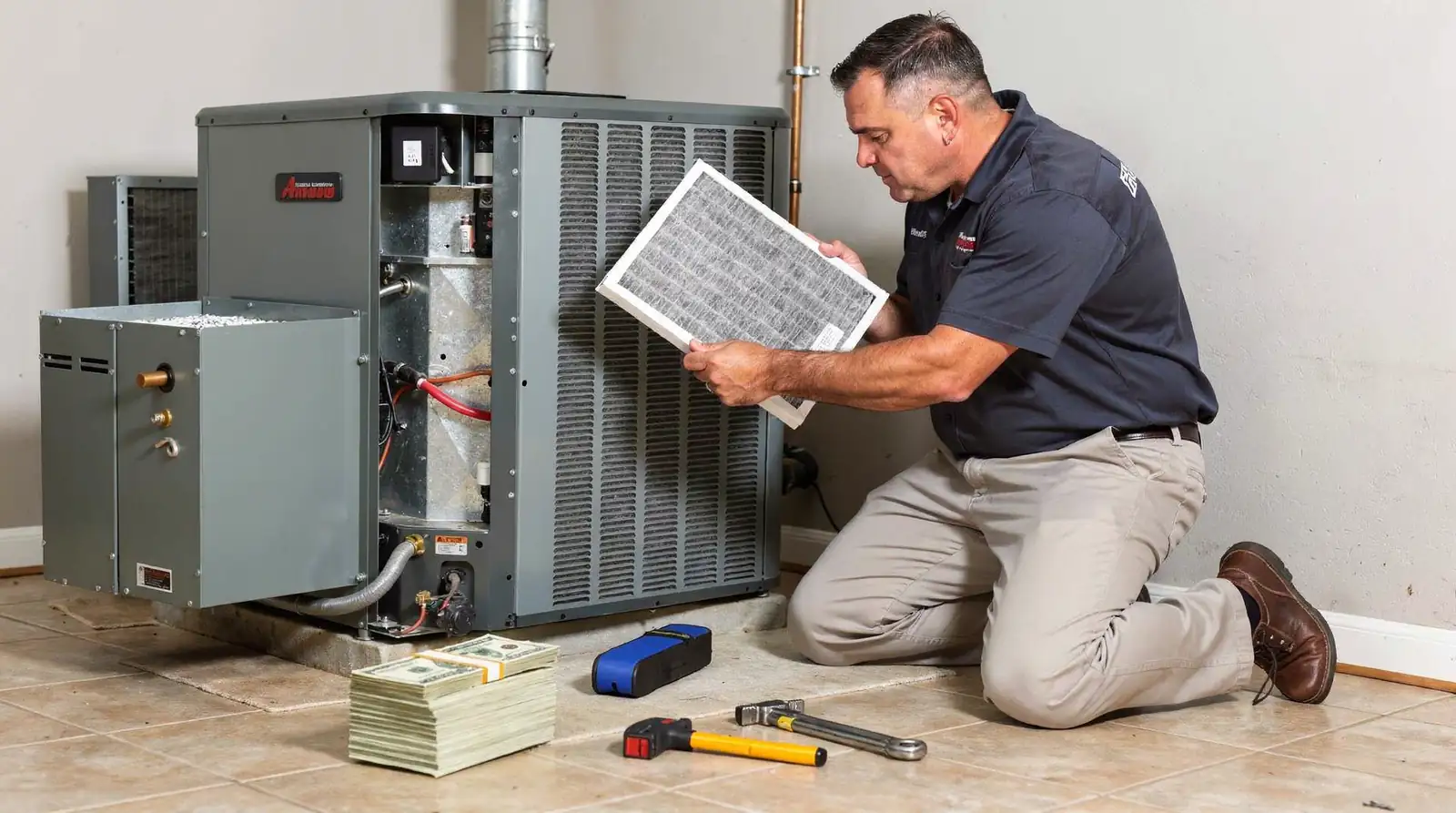
Fiberglass and pleated models represent the two primary furnace filter types homeowners choose between. Fiberglass filters cost less upfront but capture fewer particles, requiring replacement every 30 days or less. Pleated filters cost more initially but trap dust and allergens more effectively, stretching an HVAC filter change out to 90 days depending on household use.
We recommend matching the filter type to household needs before setting a replacement schedule. Pet owners, allergy sufferers, and homes with heavy dust often benefit from pleated options despite the higher upfront investment.
Filter Type
Cost
Filtration Efficiency
Replacement Frequency
Fiberglass
Lower
Lower
Every 30 days or less
Pleated
Higher
Higher
Up to every 90 days
We walk homeowners through these steps to confirm which type suits their furnace:
Check the manufacturer’s packaging for the recommended replacement schedule included with the current filter. This printed guidance offers a reliable starting point before any adjustments.
Compare that schedule against household conditions, including pets, allergies, and dust levels. These factors often push the real-world schedule earlier than the printed guideline.
Choose fiberglass for basic filtration needs and a lower upfront investment. This option suits households with minimal pets, allergies, or dust concerns.
Choose pleated filters when finer particle capture matters most. This choice pays off for households managing allergies or heavier dust and pet hair.
Schedule indoor air quality service with our team to match filtration to the specific furnace filter type installed in the home. We can confirm the right fit during a routine visit in Corsicana, TX.
Check the manufacturer’s packaging for the recommended replacement schedule included with the current filter. This printed guidance offers a reliable starting point before any adjustments.
Compare that schedule against household conditions, including pets, allergies, and dust levels. These factors often push the real-world schedule earlier than the printed guideline.
Choose fiberglass for basic filtration needs and a lower upfront investment. This option suits households with minimal pets, allergies, or dust concerns.
Choose pleated filters when finer particle capture matters most. This choice pays off for households managing allergies or heavier dust and pet hair.
Schedule indoor air quality service with our team to match filtration to the specific furnace filter type installed in the home. We can confirm the right fit during a routine visit in Corsicana, TX.
Does the Manufacturer’s Guideline Always Apply?
Manufacturer packaging offers a general starting point, not a fixed rule. Household conditions often push actual air filter replacement needs earlier or later than the printed guideline suggests. We treat it as a baseline rather than a strict deadline.
Do Older Furnaces Need a Different Filter Type?
Older systems sometimes call for a different filtration approach than newer, high-efficiency units. Drawing on more than 30 years of industry experience, we help homeowners in Corsicana, TX, match filter types correctly to both older and newer furnace systems, protecting comfort and efficiency throughout every season.
Why Does a Clogged Filter Cause Problems?
A clogged furnace air filter reduces heating system efficiency significantly, forcing the equipment to work harder for the same level of warmth. Restricted airflow strains blowers and heat exchangers, raising the risk of expensive breakdowns during the coldest months. We treat air filter replacement as a frontline defense against this kind of strain, not an optional chore.
When dust and debris accumulate on a filter, the furnace pulls air through a narrowing passage. That resistance forces the blower motor to run longer and harder, driving up energy use while comfort suffers. We see this pattern often in homes that stretch an HVAC filter change well past its recommended interval.
How Does Professional Service Address a Clogged Filter?
We pair a clean filter with hands-on equipment care during every heating service visit. Our team follows a consistent process to keep the system operating at its best:
Clean the furnace components to remove built-up dust and debris. This step clears away buildup that a filter alone cannot catch.
Vacuum internal parts that a filter alone cannot protect. This keeps sensitive components free of the fine debris that settles over time.
Lubricate moving parts, including motors and bearings, to reduce wear. Proper lubrication helps the system run quietly and last longer.
Inspect the full system for early signs of strain or damage. Catching a small issue early usually prevents a much larger repair later.
Clean the furnace components to remove built-up dust and debris. This step clears away buildup that a filter alone cannot catch.
Vacuum internal parts that a filter alone cannot protect. This keeps sensitive components free of the fine debris that settles over time.
Lubricate moving parts, including motors and bearings, to reduce wear. Proper lubrication helps the system run quietly and last longer.
Inspect the full system for early signs of strain or damage. Catching a small issue early usually prevents a much larger repair later.
These steps, paired with knowledge of different furnace filter types, keep equipment running efficiently between full-service visits.
What Happens If a Clogged Filter Goes Unaddressed?
Ignoring a clogged filter compounds strain across the entire heating system, not just the blower. We value the comfort and safety of every home and business we serve, and a neglected filter works against both. Left unchecked, a clogged filter shortens equipment life and raises the ongoing expense of keeping a home comfortable.
Where Do You Find Your Air Filter?
Most residential systems house the air filter inside the return air duct, commonly behind a drop-down vent in a hallway or utility closet. We designed this guide to help homeowners locate that panel quickly. Confirming the filter sits in good condition helps keep a small problem from growing into a costly repair.
Air filter replacement starts with finding the filter, so we recommend the following steps:
Walk through main living areas and locate the largest grille in the hallway, closet, or ceiling, since this is often the return air duct. Most homes keep the filter in one of these predictable spots.
Open the drop-down vent cover by releasing the latch or sliding panel. Handling the cover gently avoids damaging the hinge or latch mechanism.
Slide out the existing filter and note the arrow printed on its frame, which shows airflow direction. Keeping track of this arrow prevents an incorrect installation later.
Inspect the filter for buildup or damage before deciding on an HVAC filter change. A heavily soiled filter is a clear sign the interval needs to shorten.
Insert the replacement filter with the arrow pointing toward the furnace or air handler, then secure the vent cover. A properly seated cover keeps unfiltered air from bypassing the new filter.
Walk through main living areas and locate the largest grille in the hallway, closet, or ceiling, since this is often the return air duct. Most homes keep the filter in one of these predictable spots.
Open the drop-down vent cover by releasing the latch or sliding panel. Handling the cover gently avoids damaging the hinge or latch mechanism.
Slide out the existing filter and note the arrow printed on its frame, which shows airflow direction. Keeping track of this arrow prevents an incorrect installation later.
Inspect the filter for buildup or damage before deciding on an HVAC filter change. A heavily soiled filter is a clear sign the interval needs to shorten.
Insert the replacement filter with the arrow pointing toward the furnace or air handler, then secure the vent cover. A properly seated cover keeps unfiltered air from bypassing the new filter.
Why does filter placement matter for air quality?
Placement matters because the filter acts as a barrier, catching dust and particles before conditioned air cycles back through the home. A filter positioned incorrectly, or left unchecked, lets debris bypass the barrier and recirculate through living spaces.
What if I can’t locate my filter myself?
Some furnace filter types sit inside the furnace cabinet itself rather than a hallway vent. We encourage households in this situation to schedule an inspection with our team before hot weather arrives. Seasonal checkups catch filter and system issues early, and we’re glad to walk homeowners in Corsicana, TX, through what their system needs.
How Do You Install the New Filter?
Correct installation requires four steps: powering down the system, locating the housing, checking airflow direction, and securing the panel. We apply the same guided, methodical approach to this task that we bring to any equipment work in a home, so the process stays smooth from start to finish.
Before beginning, confirm the system is off and have the correctly sized replacement ready. Knowing which of the various furnace filter types your equipment requires prevents a mismatched fit and a wasted trip to the store.
Turn off the HVAC system at the thermostat so no air moves through the ducts during the swap. This protects the blower and keeps the process safe.
Locate the filter compartment, typically near the return air duct or inside the air handler cabinet. Most homes keep this compartment in one predictable spot once you know where to look.
Slide out the old filter and note the printed arrow showing airflow direction. This arrow is the key to installing the new filter correctly.
Insert the new filter with the arrow pointing toward the furnace or air handler, never facing outward. A reversed filter reduces both airflow and filtration right away.
Close and latch the compartment door, then restore power at the thermostat. A secure latch keeps the filter properly seated between changes.
Turn off the HVAC system at the thermostat so no air moves through the ducts during the swap. This protects the blower and keeps the process safe.
Locate the filter compartment, typically near the return air duct or inside the air handler cabinet. Most homes keep this compartment in one predictable spot once you know where to look.
Slide out the old filter and note the printed arrow showing airflow direction. This arrow is the key to installing the new filter correctly.
Insert the new filter with the arrow pointing toward the furnace or air handler, never facing outward. A reversed filter reduces both airflow and filtration right away.
Close and latch the compartment door, then restore power at the thermostat. A secure latch keeps the filter properly seated between changes.
Following these steps consistently protects system performance and completes the air filter replacement correctly the first time.
Does Filter Installation Differ for Different Properties?
Filter installation follows the same core steps whether the property is a single-family residence, a light commercial building, or new construction. We support all three property types, and correct fit and airflow direction matter equally across each setting. Larger commercial systems may house multiple filters, so we recommend checking every compartment rather than assuming one filter serves the entire unit.
How Do I Keep Track of Filter Changes?
A written or digital reminder tied to a maintenance plan keeps an HVAC filter change on schedule after the initial swap. Our maintenance plan helps homeowners in Corsicana, TX, pair routine filter checks with professional inspections, so nothing gets overlooked between visits. Marking the calendar date of each installation gives a reliable reference point for the next replacement.
What Mistakes Should You Avoid When Replacing?
Common errors during air filter replacement include ignoring the 90-day guideline, skipping the size check, and treating every filter the same. We see these mistakes cause avoidable strain on heating and cooling systems throughout Corsicana, TX. Each error compounds over time, turning a five-minute task into a costly repair call.
Letting the replacement interval slip beyond the general 90-day guideline strains the entire system. A clogged filter forces the blower motor to work harder, and that extra effort shortens equipment life. We recommend following this sequence to avoid the most frequent slip-ups:
Check the filter monthly, even if the replacement schedule allows up to 90 days. A quick monthly glance catches a fast-clogging filter before it strains the system.
Match the filter to the correct furnace filter types listed on the system’s owner manual. Using the wrong type undermines both airflow and filtration.
Note the installation date directly on the filter frame with a marker. This habit removes the guesswork from tracking the next change.
Inspect airflow direction arrows before sliding the new filter into place. A filter installed backward reduces performance immediately.
Schedule a full HVAC filter change at each seasonal transition, not just when convenient. Seasonal changes in system use often call for a fresh filter regardless of the calendar date.
Check the filter monthly, even if the replacement schedule allows up to 90 days. A quick monthly glance catches a fast-clogging filter before it strains the system.
Match the filter to the correct furnace filter types listed on the system’s owner manual. Using the wrong type undermines both airflow and filtration.
Note the installation date directly on the filter frame with a marker. This habit removes the guesswork from tracking the next change.
Inspect airflow direction arrows before sliding the new filter into place. A filter installed backward reduces performance immediately.
Schedule a full HVAC filter change at each seasonal transition, not just when convenient. Seasonal changes in system use often call for a fresh filter regardless of the calendar date.
Why does skipping filter changes cause bigger problems?
Ignoring filter maintenance affects three areas at once: system efficiency, household health, and household budget. A neglected filter restricts airflow, forcing the system to consume more energy for the same comfort level. Indoor air quality also suffers, since trapped dust and allergens recirculate through the home instead of being captured.
Is it worth doing this job carefully instead of quickly?
We built our company on the principle that quality outperforms shortcuts, and filter replacement reflects that standard perfectly. Rushing the task or grabbing the wrong size filter undermines the very efficiency homeowners are trying to protect. We encourage every household in Corsicana, TX, to treat this small task with the same care as a major repair, since consistent attention prevents larger, more expensive failures down the road.
When Should You Call a Professional?
We recommend calling a professional whenever air filter replacement no longer solves airflow or comfort problems on its own. A dirty filter is simple to fix. Recurring issues after a fresh filter often point to a deeper mechanical concern that requires trained eyes.
Homeowners in Corsicana, TX, do not have to guess when that line gets crossed. We offer an ongoing maintenance plan that pairs regular HVAC filter change service with full system checks, so small problems get caught before they become expensive repairs.
Before reaching out, we suggest a quick self-check:
Confirm the filter is the correct size and one of the standard furnace filter types for the system. An incorrect size or type can mimic a bigger mechanical problem.
Note whether airflow improves immediately after installing a new filter. A quick improvement usually confirms the filter was the actual issue.
Listen for unusual noises or watch for uneven heating and cooling across rooms. These signs often point to something beyond the filter itself.
Check whether the problem returns within days of a fresh filter. A fast return of symptoms is a strong signal that the system needs a closer look.
Confirm the filter is the correct size and one of the standard furnace filter types for the system. An incorrect size or type can mimic a bigger mechanical problem.
Note whether airflow improves immediately after installing a new filter. A quick improvement usually confirms the filter was the actual issue.
Listen for unusual noises or watch for uneven heating and cooling across rooms. These signs often point to something beyond the filter itself.
Check whether the problem returns within days of a fresh filter. A fast return of symptoms is a strong signal that the system needs a closer look.
If symptoms persist after these steps, we are ready to help. Our team brings more than 30 years of industry experience to residential and light commercial properties alike, and we welcome the chance to talk through the details with homeowners in Corsicana, TX.
Can a filter problem signal a bigger air quality issue?
Yes. Persistent dust, odors, or allergy flare-ups often mean the whole system needs attention, not just the filter. We pair indoor air quality solutions and heat pump services with routine maintenance to address the whole-home picture.
What if I’m not sure whether my filter or my system is the problem?
We encourage a call rather than a guess. Our maintenance plan includes inspections designed to separate a simple filter issue from a mechanical one, giving homeowners a clear answer and a reliable path forward.
Let Us Help You Protect Your Home’s Comfort
Maintaining your HVAC air filter through regular replacement and proper installation protects your system’s efficiency and your home’s air quality. By following the correct procedures outlined in this guide, you help ensure optimal performance and a longer lifespan for your equipment. At Patriot Home Solutions Heating & Air Conditioning Services in Corsicana, TX, we remain committed to helping homeowners achieve reliable comfort through expert guidance, and we welcome the opportunity to help whenever you’re ready to schedule service.
FAQ
How often do I need to replace a 1-inch fiberglass filter?
We recommend replacing 1-inch fiberglass filters every 30 days. This frequent schedule keeps HVAC system performance and efficiency at their best.
How do I know what size replacement filter to buy?
We recommend checking the cardboard frame of the current filter for the printed dimensions. If that frame is damaged or unreadable, measuring the slot opening directly gives an accurate size.
Which direction does the new filter go in?
Note the airflow arrow printed on the old filter’s frame before removing it. Installing the new filter with the arrow facing the same direction keeps airflow and filtration working as intended.